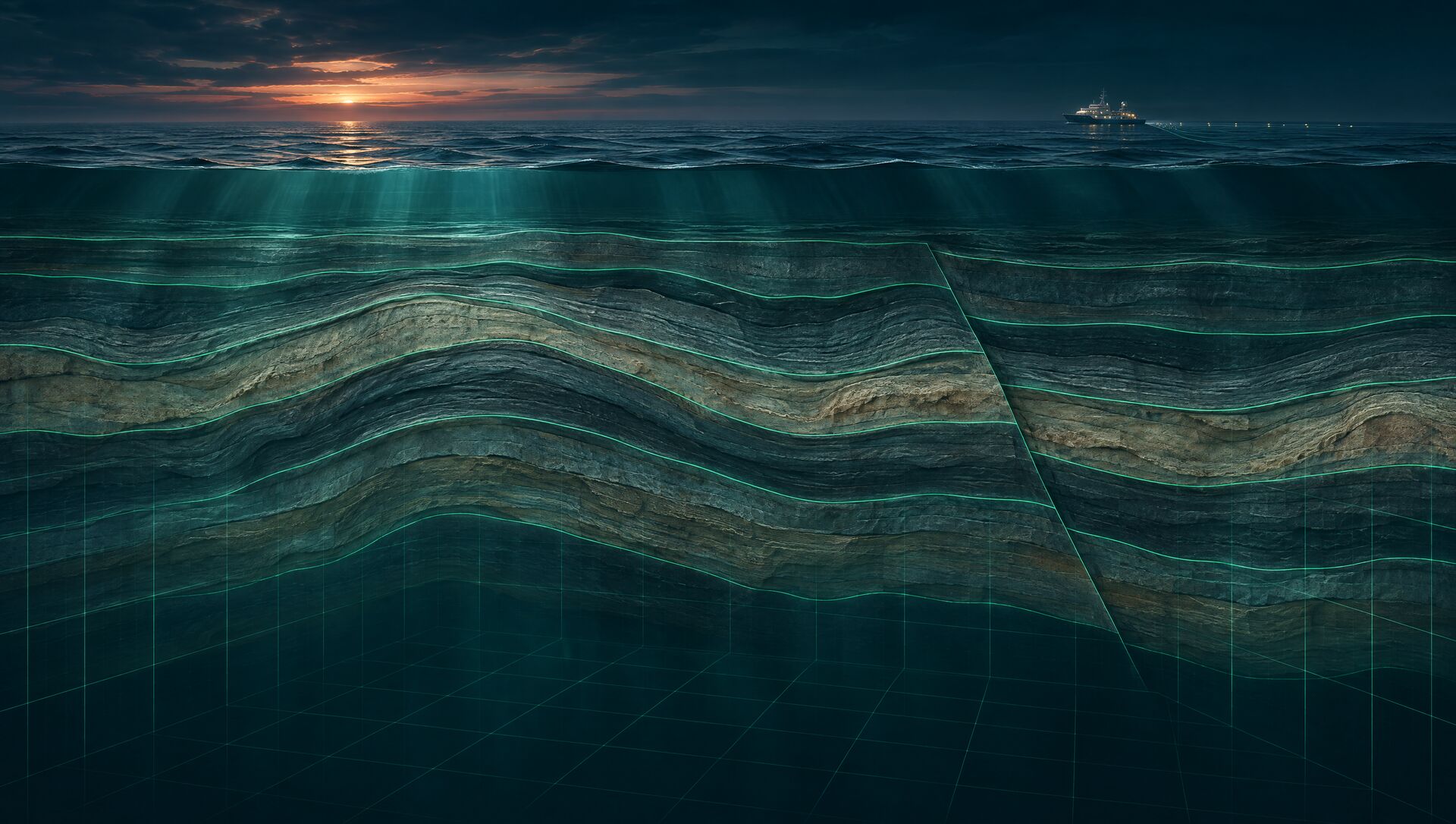
Rejuvenate
More geology from the seismic you already own.
Less assumption. More science. Greater confidence.
After a costly campaign, geophysicist Ken Armitage spent more than a year reworking the data. His answer: every result was predictable from data that existed before a single well was drilled.
drilled in Block 58, offshore Suriname, before the Sapakara South discovery (2023).
billed to Guyana for dry holes drilled in 2023.
Fifty years on, the gap is the same. Sources: Oil Now (2023); Kaieteur News (June 2024).
Millions of years of geology. Very little of it certain.
Between the wells, interpreters fill the gaps with regional models, analogues and judgement. Every assumption carries exploration risk.
What is the geology here?
Appearance alone doesn't reveal the rock and fluid properties that decide where a well should go. Rejuvenate builds a three-dimensional cellular framework, at the resolution of your seismic, to find out.
Cause, then effect. Then check.
Normalisation
Filters the seismic for over- or under-compaction and moves the datum to normal burial depth where needed.
Geological causal model
Divides the subsurface into cells at seismic resolution and reads each cell's attributes and shapes to find its geological cause.
Trace sample conversion
Converts every trace sample into rock properties and a pseudo well log. A reverse check confirms the model reproduces the original seismic.
Built science first: decades of historical well data, dry and commercial; proprietary geophysical algorithms; AI added for pattern recognition and scale.
A pseudo well log for every trace.
Outputs are derived pseudo logs, returned in SEG-Y to load straight into your workstation. They support the geoscientist; they don't replace them.
The whole survey. Not just near the wells.
Seismic only. Wells held back. Five days.
87% average match between Rejuvenate's pseudo logs and the 10 held-back wells.
Rejuvenate processed the sequence data into models of geometry, geology and rock properties, then imaged lithology, porosity, permeability, seal, reservoir and trap properties.
Fifty years of doing it one way. Shouldn't we look at this differently?
Exploration
Better drilling locations, especially where well data is limited.
Infill drilling
Define reservoirs, seals and traps between existing wells.
Field development
Plan infrastructure around the reservoir that is really there.
Archived seismic
Find overlooked opportunities in data you already own.
Project evaluation
A quantitative, independent second opinion.
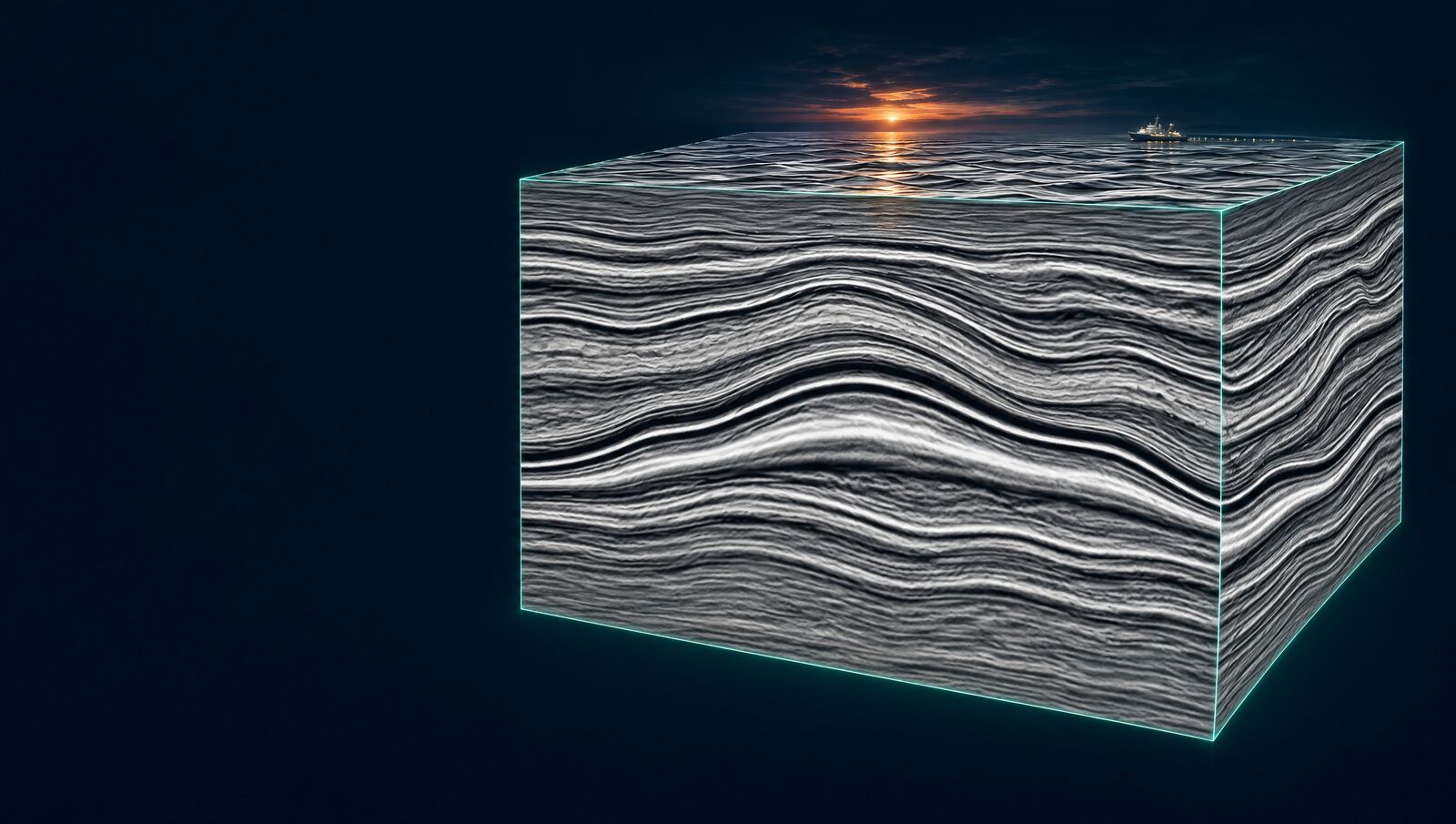
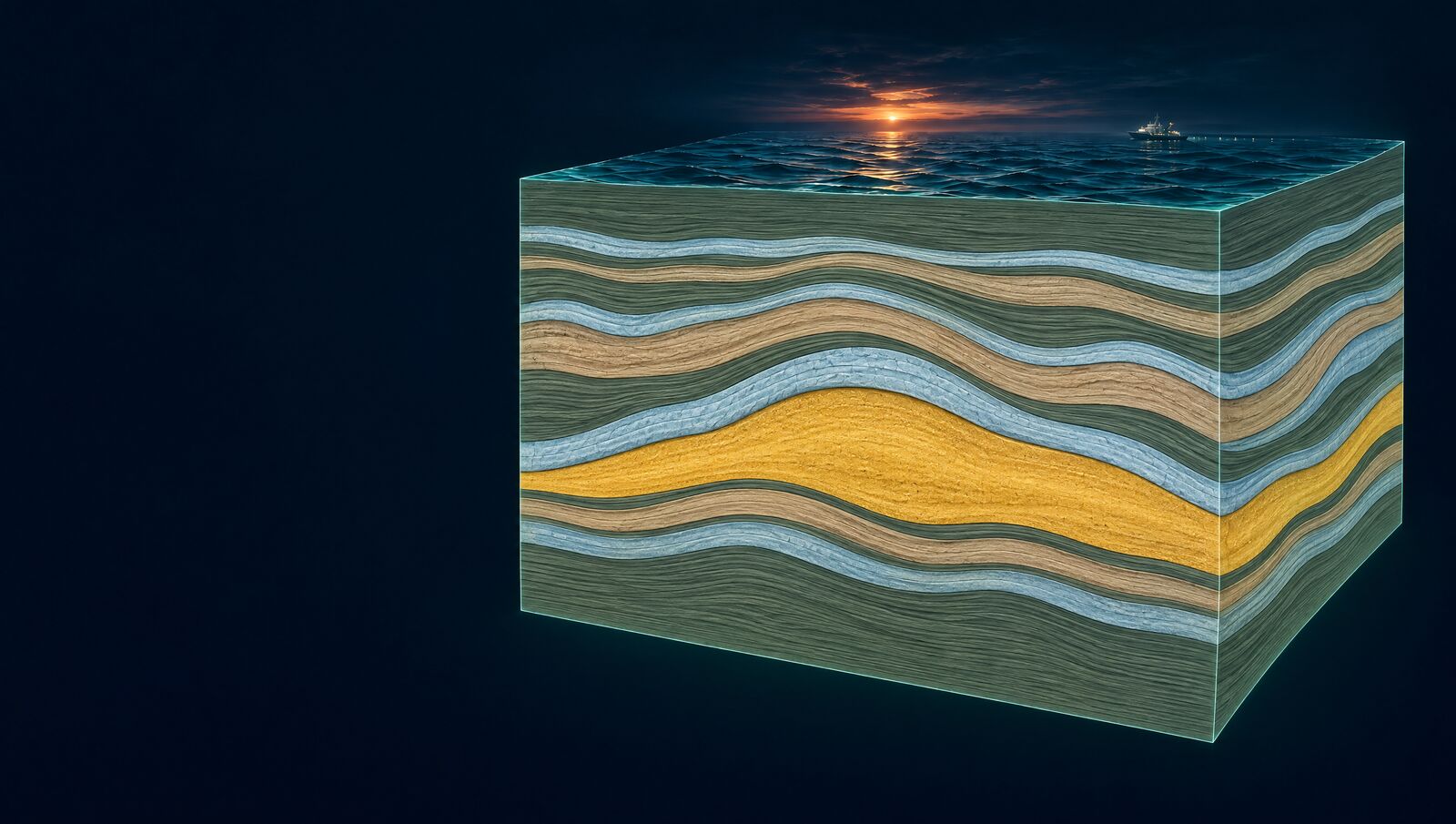
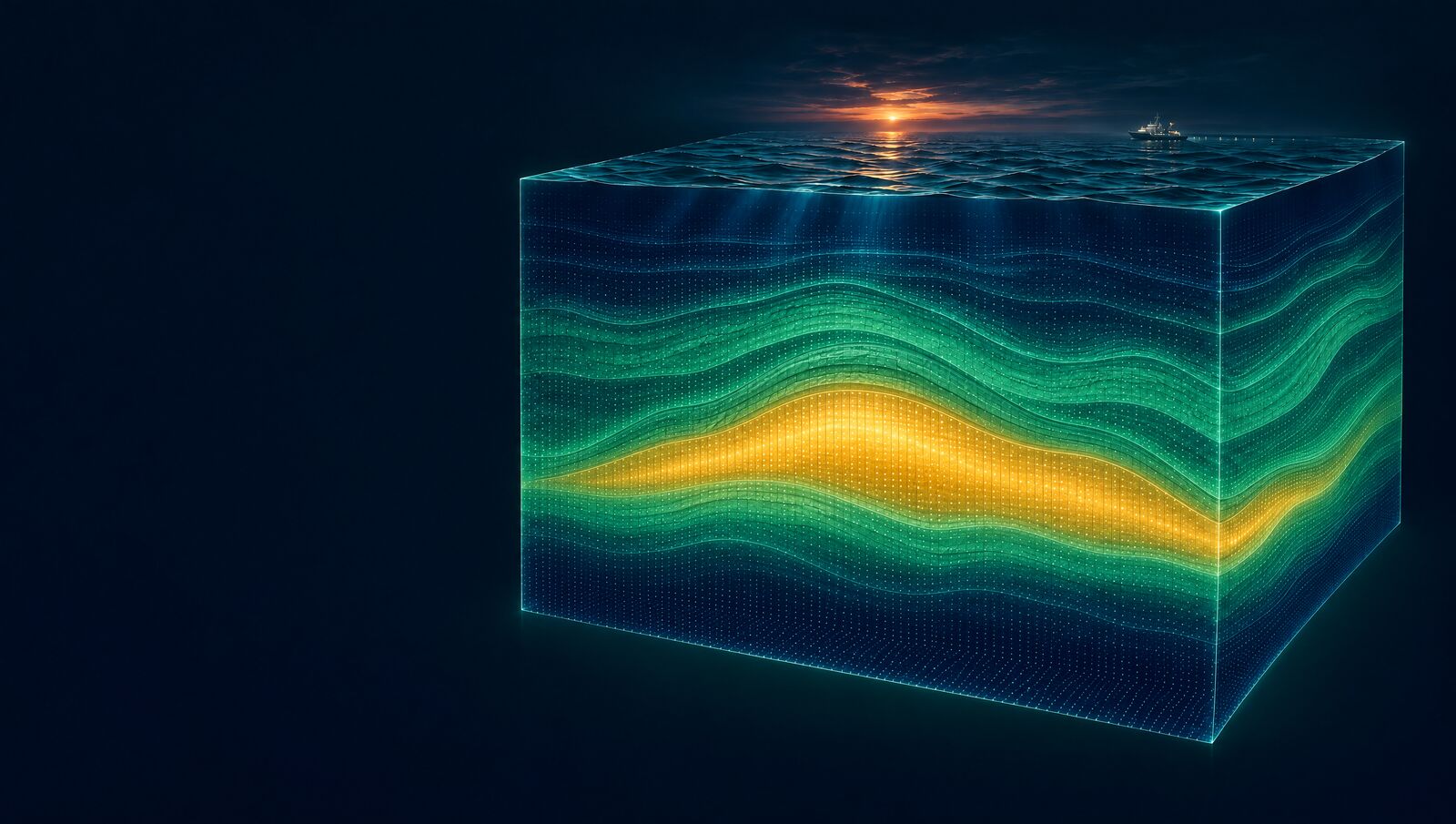
Same survey. New information.
What you have today: reflections, and the judgement needed to interpret them.
Illustrative visualisation, not a processed client dataset.
Ken Armitage
He insisted Rejuvenate be proven in every geography, geology and sediment. Ken passed away in 2025; his science now reaches the market through Vigilant.
"Not every well was a commercial success, but every well had something to say."
Put it to the test on your own data.
- You share a subsetExisting seismic only. Well information stays with you.
- Rejuvenate processesEnhanced datasets across the whole area, in days.
- You pick the wellsAfter processing, you choose where pseudo logs are produced.
- Compare the resultsActual logs resampled to seismic resolution for a direct comparison.
+44 (0)7541 171111 · [email protected]